Never miss a building compliance deadline again.
Certmill tracks every certification and inspection your buildings owe, in one deadline calendar with the evidence binder attached. Free to start.
- Every cert your building owes, per jurisdiction, from official agency pages
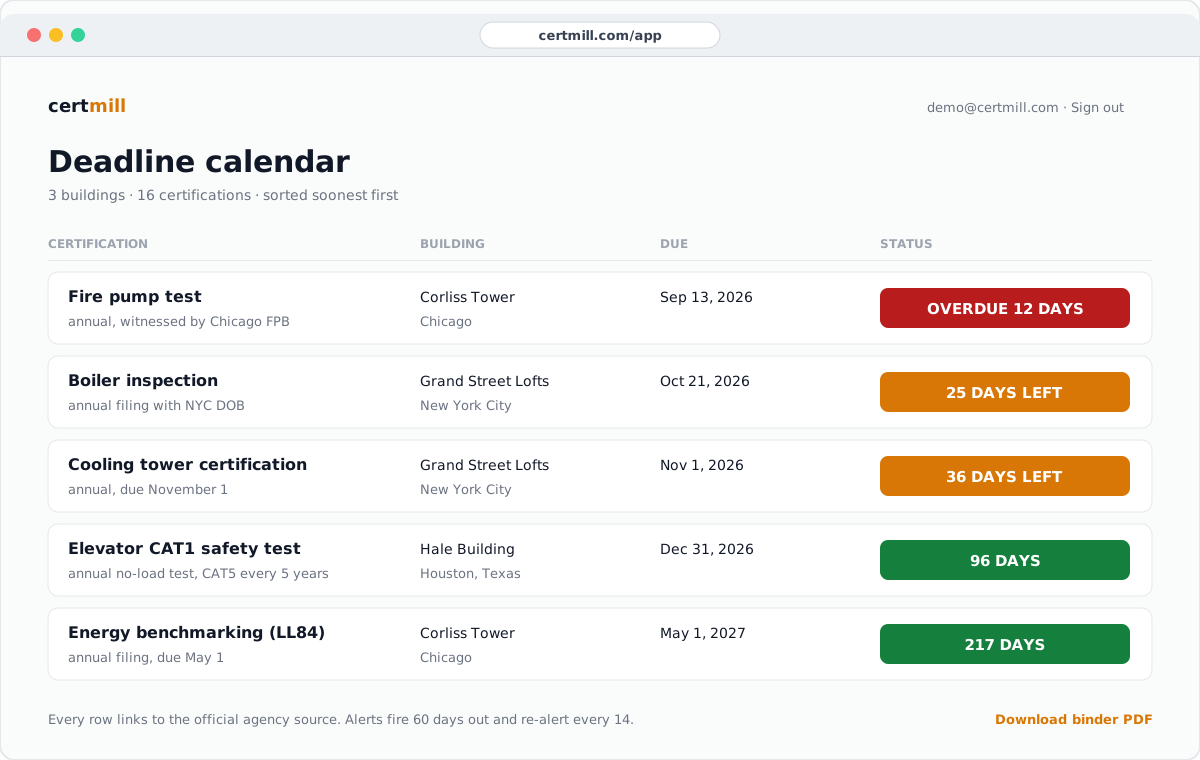
- Color-coded countdown to each filing deadline: red overdue, amber, green
- Deadline alerts 60 days out, re-alerted every 14 until you file
- Fire-marshal-ready evidence binder as a PDF, one click
How it works
Requirement database
Which certifications apply, how often, from the agency's own pages. Starting with Texas, Pennsylvania, Illinois, Chicago, and New York City: 29 requirement types.
Pricing
Per-building pricing, month to month. Free is the whole requirements database, no card.
Frequently asked questions
Most jurisdictions require at least one elevator inspection per year. In NYC the cycle is two obligations: an annual Category 1 (no-load) safety test and a Category 5 full-load test every five years, each filed with the Department of Buildings. Frequency and filing windows vary by jurisdiction, which is why Certmill tracks the exact rule per building.
Boiler inspections in New York City run on the calendar year and must be completed and filed with NYC DOB by December 31. High-pressure boiler reports are filed within 45 days of the inspection.
FISP, the facade inspection safety program, runs on a five-year cycle determined by your tax block number. Filing windows open by sub-cycle; for Cycle 10B, blocks ending in 0, 7, or 8 began filing February 21, 2026. Certmill records your building's cycle and tracks the date.
Local Law 152 requires gas piping inspections every four years, phased in by community district. The 2026 filings cover community districts 4, 6, 8, 9, and 16 across all boroughs.
Cooling tower registrations must be certified annually through the DOB cooling tower portal by November 1, with maintenance and sampling logs kept current.
Yes. Since January 1, 2024, every building with a parapet fronting the public right-of-way needs an annual parapet observation, regardless of building height, and reports must be kept for six years.
Covered buildings submit annual energy and water use through the EPA Energy Star Portfolio Manager by May 1 of every year, and post the building energy efficiency rating label near each public entrance by October 31.
Missed filings typically become DOB or ECB violations with civil penalties, and in NYC unpaid violations become judgment liens on the property. In January 2024, DOB levied initial penalties on more than 400 owners for late parking structure inspection reports alone. Tracking deadlines is the cheapest fix.
You pick the jurisdiction and check the equipment your building runs: boiler, elevators, gas piping, cooling towers, parapets, parking structure, and more. Certmill expands its requirement database, which cites only official government sources, into your building's deadline calendar.
No. Certmill is an evidence and tracking tool: it tells you what is due, when, and from which agency, and keeps your binder of certificates and expirations. Filings with the agency stay with you or your service provider.